19th International Conference on
Parallel Problem
Solving From Nature
August 29 - September 2, 2026
Trento, Italy



19th International Conference on
August 29 - September 2, 2026
Trento, Italy
The International Conference on Parallel Problem Solving From Nature (PPSN) is a biannual open forum fostering the study of natural models, iterative optimization heuristics, machine learning, and other artificial intelligence approaches. PPSN was originally designed to bring together researchers and practitioners in the field of Natural Computing, the study of computing approaches that are gleaned from natural models. Today, the conference series has evolved and welcomes works on all types of iterative optimization heuristics. Notably, we also welcome submissions on connections between search heuristics and machine learning or other artificial intelligence approaches. Submissions covering the entire spectrum of work, ranging from rigorously derived mathematical results to carefully crafted empirical studies, are invited.
All information regarding the conference organization, papers/tutorials/workshops, submission, registration, venue, etc. will be provided and constantly updated on this website and on our social media channels.
Download the PPSN 2026 conference booklet.
In case of any additional inquiries, please do not hesitate to contact us at ppsn2026@unitn.it.
See you soon in Trento, Italy!
Giovanni Iacca, PPSN 2026 Conference Chair

The proceedings have been published in the Lecture Notes in Computer Science (LNCS) series by Springer:
Volume 1 (LNCS Volume 16985)
Volume 2 (LNCS Volume 16986)
Volume 3 (LNCS Volume 16987)
Volume 4 (LNCS Volume 16988)
Volume 5 (LNCS Volume 16989)
Please note that, according to the Springer Licence to Publish Proceedings Papers (Section 4), only the Submitted Manuscript, i.e., the version of the paper before peer review, can be published as a preprint (e.g., on arXiv). Once the paper has been published, the authors must include an acknowledgement and provide a link to the Version of Record on the publisher’s website. Please refer to the licence-to-publish form for more details.
Following PPSN's unique tradition, all accepted papers will be presented during the poster sessions and will be included in the proceedings.
Posters must be prepared in DIN A0 portrait (i.e., vertical) format.
Workshop Chair:
Sarah Thomson
Bayesian and surrOgate-aSsisted Search and Optimisation (BOSS)Website
Tinkle Chugh, Alma Rahat, Paul Kent and George de Ath
Evolutionary Computation and Explainable AI (ECXAI)Website
Jaume Bacardit, Alexander Brownlee, Stefano Cagnoni, Martin Fyvie, Giovanni Iacca and David Walker
Nature-Inspired Computation on High-Performance SystemsWebsite
Mark Coletti, Philippe Codognet, El-Ghazali Talbi and Swetha Varadarajan
Quantum vs Classical Optimisation: Synergies and BoundariesWebsite
Zakaria Abdelmoiz Dahi and Pascal Halfmann
Tailoring Optimization Approaches with Domain KnowledgeWebsite
Elena Raponi, Vanessa Volz, Carola Doerr and Joshua Knowles
Tutorial Chair:
Yuri Lavinas
Advances in Evolutionary Algorithm Hyper-Heuristics
Nelishia Pillay
A Gentle Introduction to Theory (for Non-Theoreticians)
Benjamin Doerr
AI for Security, Security for AI: Practical Methods and Research Frontiers
Stjepan Picek and Domagoj Jakobović
Bayesian Optimization
Juergen Branke, Ivo Couckuyt, Sebastian Rojas Gonzalez and Elena Raponi
Coevolution for Multi-Model Neural Networks: Training Beyond End-to-End Gradients
Jamal Toutouh and Una-May O’Reilly
CMA-ES
Youhei Akimoto and Nikolaus Hansen
Constraint-Handling Techniques used with Evolutionary Algorithms
Carlos A. Coello Coello
Engineering greener evolutionary algorithms
JJ Merelo-Guervos
Evolutionary Algorithms and Quantum Computing: Connections and Opportunities.
Darrell Whitley
Evolutionary Multi-Objective Algorithms for Constrained Single-Objective Combinatorial Optimization Problems: Theory and Applications
Frank and Aneta Neumann
Foundations and Frontiers of Landscape Analysis
Gabriela Ochoa, Arnaud Liefooghe, Katherine Malan and Sébastien Verel
Genetic Improvement: Improving real-world software using computational search
Alexander (Sandy) Brownlee, John Woodward and Markus Wagner
GPU Genetic Programming and the Beagle System
Nathan Haut, Ilya Basin and Wolfgang Banzhaf
Large Language Model driven Automated Algorithm Design with Evolutionary Computing
Niki van Stein, Anna V. Kononova, Roman Senkerik, Adam Viktorin, Michal Pluhacek and Thomas Bäck
Linkage Learning for Discrete Optimization (+ Model-based Evolutionary Algorithms)
Peter A. N. Bosman, Michal Witold Przewozniczek and Dirk Thierens
Performance Evaluation of Unconstrained and Constrained Multi-Objective Evolutionary Algorithms on Artificial and Real-World Problems
Lie Meng Pang and Hisao Ishibuchi
Robot Evolution
Gusz Eiben
Structural bias in optimisation algorithms
Anna V. Kononova, Niki van Stein and Jakub Kudela
Theory of Popular Multiobjective Evolutionary Algorithms
Andre Opris and Joshua Knowles
Theory of Population-based Evolutionary Algorithms on Complex Fitness Landscapes
Per Kristian Lehre and Duc Cuong Dang
Tools and Algorithms for Machine-Learning-Based and Deep-Learning-Based Evolutionary Computation
Achiya Elyasaf and Eliad Shem-Tov
Hexaly: the next-generation MIP solver
Francesco Gallo
The conference is sponsored by:

We are proud to announce that our proceedings will be published as part of the Lecture Notes in Computer Science (LNCS). Free access to the conference publications will be provided right before the conference.
The series Lecture Notes in Computer Science (LNCS), including its subseries Lecture Notes in Artificial Intelligence (LNAI) and Lecture Notes in Bioinformatics (LNBI), has established itself as a medium for the publication of new developments in computer science and information technology research and teaching. The cornerstone of LNCS's editorial policy is its unwavering commitment to report the latest results from all areas of computer science and information technology research, development, and education.
LNCS has always enjoyed close cooperation with the computer science R & D community, with numerous renowned academics, and with prestigious institutes and learned societies. Our mission is to serve this community by providing an invaluable publication service.
LNCS commenced publication in 1973 and rapidly attracted attention, not least because of its unprecedented publication turnaround times. In the late 1990s we developed a systematic approach to providing LNCS in a full-text electronic version, in parallel to the printed books. Another new feature introduced in the late 1990s was the conceptualization of a couple of color-cover sublines. Still, original research results reported in proceedings and post proceedings remain the core of LNCS.
Biological intelligence emerges from collectives of locally interacting components rather than from centrally specified architectures. Nervous systems develop from compact genetic descriptions, neurons differentiate through local interactions, and synapses continue to change throughout life. This talk examines how evolutionary computation can exploit these principles to create artificial systems that self-organize and adapt. The first part introduces neural developmental programs: compact genotype-to-phenotype mappings that construct networks through local message passing, structural growth, neuronal differentiation, and synaptic prediction. Rather than optimizing every parameter directly, evolution searches for reusable local rules that generate the network and its dynamics. Development alone, however, is not sufficient for adaptation after deployment. The talk therefore considers evolved local plasticity rules, which allow networks to reorganize during an agent’s lifetime, recover from perturbations, and adapt during transfer from simulation to physical robots. The final part shifts the level of collective organization—from neurons within a controller to physical modules within a larger structure. In our recent work on smart cellular bricks, identical modules communicate only with their neighbours yet collectively recognize shape, tolerate failures, and detect damage without central control or global coordinates. Together, these examples suggest that local developmental, plasticity, and communication rules can be discovered from which robust collective intelligence emerges.

Professor Sebastian Risi is a Research Scientist at Sakana AI and leads the Creative AI Lab at the IT University of Copenhagen, where he also co-directs the Robotics, Evolution and Art Lab (REAL). His research focuses on computational evolution, deep learning, creative AI, lifelong learning, and human–AI collaboration. He is the recipient of an ERC Consolidator Grant for GROW-AI, a project developing AI systems that can rapidly adapt to unknown environments. Beyond academia, he co-founded modl.ai, bringing AI innovation to game development. His research has been featured in Science, New Scientist, Wired, and Popular Science.
Space has always been a catalyst for innovation. Many of the technologies developed to meet the extreme challenges of space missions have ultimately transformed everyday life on Earth. Today, artificial intelligence (AI) is driving a new technological revolution, reshaping the way we observe our planet, explore the Solar System, and interact with the vast volumes of data generated by modern space missions. AI, machine learning and evolutionary algorithms are rapidly becoming fundamental components of the space ecosystem. From enabling autonomous planetary exploration to extracting actionable knowledge from Earth observation data, these technologies are expanding the frontiers of scientific discovery while creating new opportunities for environmental monitoring, climate resilience, precision agriculture, disaster response, and the broader space economy. This keynote will explore how AI is transforming two of the most dynamic areas of space activities: planetary exploration and Earth observation. Planetary exploration drives the development of highly autonomous and intelligent systems capable of operating in the harsh and uncertain environments of the Solar System, while Earth observation enables an ever-growing range of applications that are fundamental to environmental monitoring, sustainable resource management, and the expanding space economy. The talk will discuss the unique challenges posed by remote sensing data, the transition from data acquisition to semantic understanding, and the role of intelligent systems in supporting autonomous decision-making in complex and often unpredictable environments. Through examples drawn from climate change, precision agriculture, cryosphere monitoring, and planetary exploration missions, the presentation will highlight the remarkable progress achieved over the past decade, discuss the scientific and technological challenges that remain, and outline future research directions.

Professor Lorenzo Bruzzone is a researcher at the University of Trento and leads the Remote Sensing Laboratory (RSLab). His research spans remote sensing, radar systems, signal processing, and artificial intelligence for Earth observation and planetary exploration.
He has led numerous national and international projects and serves as Principal Investigator for instruments in major European Space Agency (ESA) missions, including the Radar for Icy Moon Exploration (RIME) on JUICE, the Subsurface Radar Sounder (SRS) on EnVision, and the High Resolution Land Cover project within ESA’s Climate Change Initiative. With over 400 journal publications and numerous international awards, he is widely recognised as one of the leading scientists in his field, contributing significantly to advances in remote sensing and planetary science.
Recent advances in generative design techniques – particularly those rooted in Evolutionary Algorithms – are revolutionising the ability to quickly design both ‘static’ objects (e.g. in architecture, engineering) and in robotics. This offers an exciting opportunity to move the field of robotics – once exclusive to large, highly-funded industries – to a new state which makes robotics accessible, affordable, and easy-to-use for everyday individuals, for example those working in environmental fields. In this talk, I will first give an overview of the key milestones in the field of EA-based design of robots, before moving on to discuss recent innovations in representations, algorithms, architectures, and in the use of foundation models that are collectively accelerating progress towards being able to realise ‘real-world’ ready, cheap to design and manufacture, robots for all.
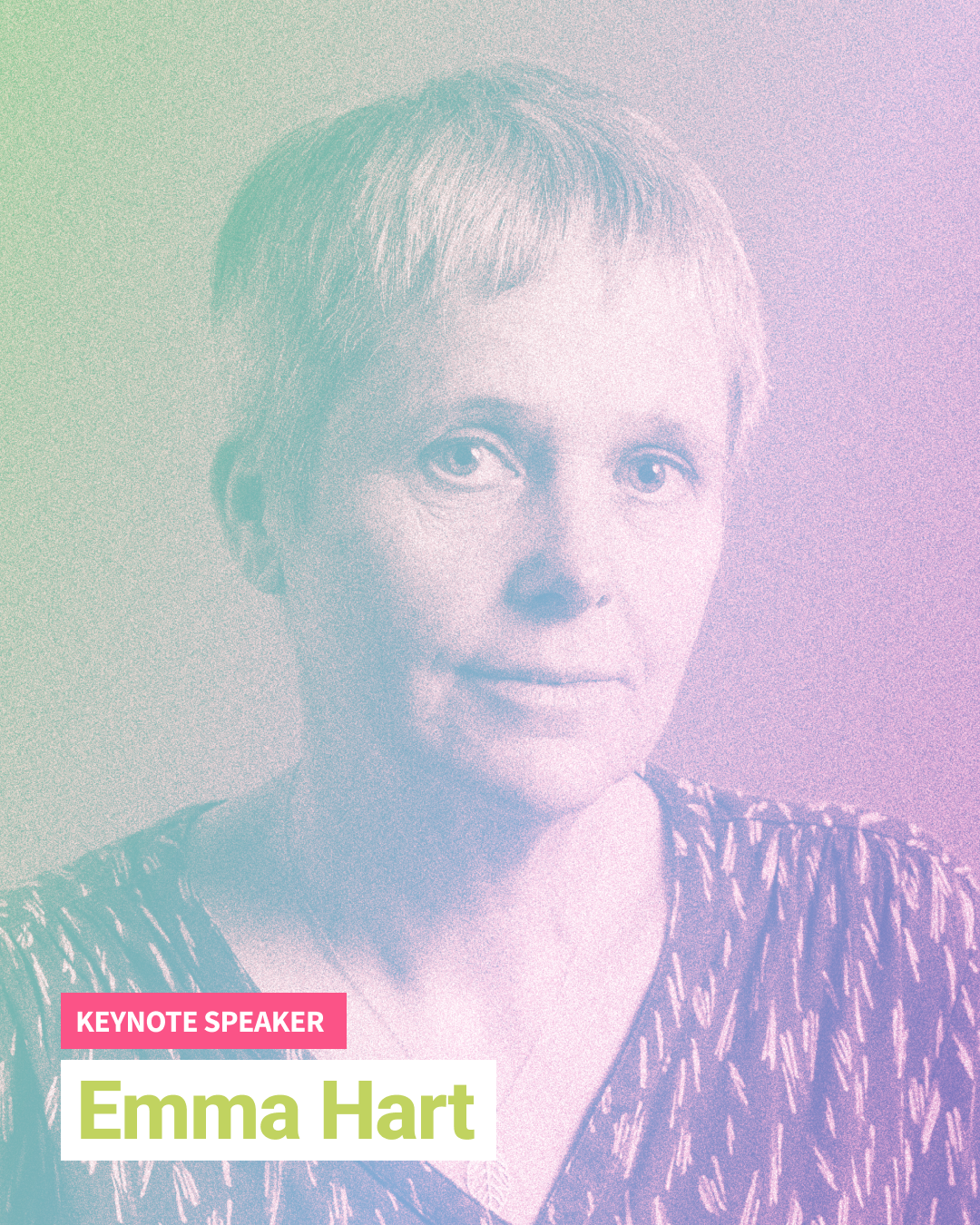
Professor Emma Hart has worked in the field of Evolutionary Computing for over 20 years. Her current work is mainly centred on developing optimisation systems that ‘keep learning’ over time, with applications in combinatorial and continuous optimisation and in Evolutionary Robotics at Edinburgh Napier University. The work in robotics has attracted significant media attention including recently in New Scientist and The Guardian. She gave a TED Talk on this subject at TEDWomen in December 2021 in Palm Springs, USA, which has attracted over 1 million views since being released online in April 2022.
She is co-author of a new book, Robot Evolution, to be published by Springer in late 2026. She was the Editor-in-Chief of the journal Evolutionary Computation (MIT Press) from 2017–2024 and an elected member of the ACM SIG on Evolutionary Computing. In 2022, she was honoured to be elected as a Fellow of the Royal Society of Edinburgh for her contributions to the field of Computational Intelligence and was awarded the ACM SIGEVO Award for Outstanding Contribution to Evolutionary Computation in 2023.
|
Author Registration (HARD DEADLINE June 12, 2026) |
Early Registration (HARD DEADLINE July 12, 2026) |
Late Registration (HARD DEADLINE JULY 31, 2026) |
|
|---|---|---|---|
| Regular Registration | 650.00 € | 650.00 € | 850.00 € |
| Discounted Registration* | / | 450.00 € | 650.00 € |
Compulsory attachments required during the registration process (only for specific categories of registrants):
Authorization document ONLY for registrants affiliated with UNITN.
Invoice data request ONLY for registrants affiliated with other Italian institutions.
The registration of participation is binding.
At least one author of an accepted paper must complete their registration by the camera-ready deadline of June 12, 2026, and attend the conference to present the corresponding poster in order for it to be included in the conference proceedings. Virtual participation is not possible.
Once your registration has been successfully completed, an online invoice will be emailed to you, along with the payment instructions. Please note that it may take a few days to receive the email with the invoice and instructions since the time you register.
Therefore, the deadlines mentioned above refer to the completion of the registration, not to the payment. For payment, you will have at least one week after you receive the invoce.
The preferred method of payment is through pagoPA (the system used in Italy for public administrations). Please follow these instructions for details.
In case of issues with the pagoPA system, or if you haven't received the email within one week from registration completion, please send an email contabilita.collina@unitn.it cc'ing both eventi-collina@unitn.it and ppsn2026@unitn.it.
After the early bird registration deadline (July 12, 2026), the regular participation fee will be charged.
No further registration will be accepted after July 31, 2026.
Participation is not guaranteed until full payment of the registration fee is received.
Please note that cancellations are not possible.
Please note that you have the right to nominate someone else from the same organization to attend the conference in your place within two weeks prior to the conference opening. Please inform us via email at ppsn2026@unitn.it if you wish for your place to be taken by a colleague.
Payments (only registration fee) will be refunded if the conference is canceled by the organizer. In that case, the organizer will have no further liability to the client. Registrations remain valid if the conference has to be postponed.
If you need an invitation letter for a Visa application, please send an email to ppsn2026@unitn.it.
PPSN 2026 will be hosted by the University of Trento at Trento Expo. Located in the middle of one of the most beautiful mountain regions in northern Italy, Trento is a medium-sized city, just a few kilometers away from the Dolomites and the Garda Lake, famous for its cultural and sports activities. In the last decade, Trento has established itself as an internationally recognised center for AI, offering a rich ecosystem of research institutions and R&D companies, and hosting an ELLIS Unit.
European Flights ✈️
Via Verona Airport
Bus (see the website for further information) to "Verona Porta Nuova" train station, then direct trains to Trento. Italian trains website
Via Bergamo Airport
Bus (see the website for further information) to "Verona Porta Nuova" train station, then direct trains to Trento. Italian trains website
Intercontinental Flights 🌍
Via Malpensa Airport
Train from airport to Milan Central Station. From there, high-speed or regular trains to Verona or Trento. Italian trains website
Via Venice Airport
Bus to "Venezia Mestre" train station. From there, high-speed or regular trains to Verona or Trento. Italian trains website
Trains 🚆
Trento is served by Italian railways and Austrian railways.
Flixbus 🚌
Trento is served by Flixbus, there are some direct buses, usually from Austria, that will stop in Trento.
Accommodation 🏨
A list of hotels with active agreements with the University of Trento can be found on the dedicated page. To receive further information about other accommodations in Trento, visit the accommodation page of the Azienda per il turismo Trento e Monte Bondone.
Please contact the chosen accommodation directly to make a reservation.
Booking.com or other websites can obviously be a further source for accommodation.
Social Event Venues 🎉
Monday, 31/08/2026 at 6:00 PM
Welcome drink at the 16th-century Cloister of the Agostiani, with a special musical performance by the University Choir.
Tuesday, 01/09/2026 at 7:00 PM
Social dinner at Ristorante Prime Rose, featuring a panoramic terrace on Lake Levico. Shuttle buses will depart from Piazza Dante to take guests to the venue.
Wednesday, 02/09/2026 at 5:00 PM
Guided tour of MUSE, the Science Museum of Trento, housed in a striking building designed by renowned Italian architect Renzo Piano.
Nearby Locations
200 m MUSE - Science Museum
800 m Duomo Square
1.8 km Buonconsiglio Castle
1.1 km Cable car to Sardagna
3.8 km The Orrido of Ponte Alto
1.4 km Le Gallerie di Trento
1.3 km Train station
60 km Bolzano
100 km Verona
Conference Chair
Giovanni Iacca, University of Trento, Italy
Program Chairs
Doina Bucur, University of Twente, The Netherlands
Antonio Della Cioppa, University of Salerno, Italy
Ting Hu, Queen's University, Canada
Eric Medvet, University of Trieste, Italy
Sarah L. Thomson, Napier University, Scotland
Tutorials Chair
Yuri Lavinas, University of Toulouse Capitole, France
Workshops Chair
Sarah L. Thomson, Napier University, Scotland
Proceedings Chairs
Giorgia Nadizar, University of Toulouse Capitole, France
Anil Yaman, Vrije Universiteit Amsterdam, The Netherlands
Publicity Chairs
Jessica Mégane, University of Coimbra, Portugal
Jéssica Parente, University of Coimbra, Portugal
Local Support Chairs
Elia Cunegatti, University of Trento, Italy
Stefano Genetti, University of Trento, Italy
Erik Nielsen, University of Trento, Italy
Chiara Camilla Rambaldi Migliore, University of Trento, Italy